
Interview with Paula Ramos co-founder of Lava Art Project

Today’s post is an interview featuring a special guest who shares her experience working with emerging artists, comments on the current socio-economic situation of many artists and what needs to be done to correct this. Paula Ramos is a researcher, writer and curator based in Amsterdam. She is also the co-founder of Lava Art Project, a thriving arts business dedicated to representing and supporting the work by emerging young artists.
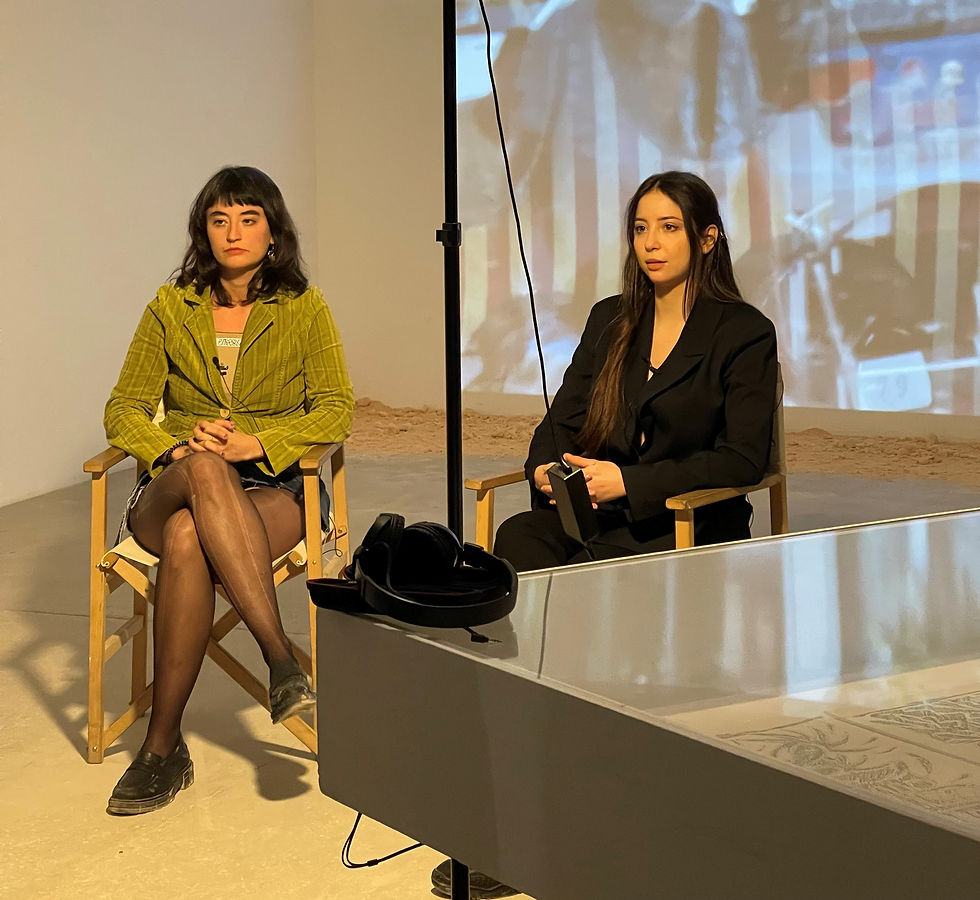
Paula, I know your work and that what you do in Lava involves helping emerging artists on a daily basis, can you tell us what is the most pressing concern the artists you work with have?
I think the answer is pretty straightforward: money. Maybe due to my socioeconomic background, I have usually worked with artists that come from the middle and lower classes. In these cases, artists have to be overemployed in order to make a living or, as it happens in Southern European countries, live from their parents’ money for much longer than they would want to. Artists that do not come from a wealthy background but that have the cultural and symbolic capital to be working in the arts struggle with the idea of never living up to their education and dedicating themselves to their actual profession, as there is an enormous lack of support from institutions and the private sector. What usually ends up happening, and I believe we have all experienced this, is that they take up too many poorly paid jobs, some of which do not even have anything to do with what they are trained or educated for. Therefore, taking up any art related job offer that might pop up, even if the conditions are terrible, becomes the only way of doing something that you actually like. Though of course there is nothing wrong in working at different sectors to make a living (as long as it is not exploitative) and indeed is something that both artists and other cultural workers usually do whilst doing their own stuff before achieving a full-time status in the arts sector.
On a different note, another concern that usually emerging artists have is how to frame their work. In a post-conceptual art world where all art has, indeed, become philosophy in some way, following the definition by Arthur C. Danto, a lot of them need theoretical content to help them support and validate their ideas. I do not mean that to be validated as an artist you should always have a philosophical discourse behind it, yet I do believe that the very same concept of art has evolved in a way in which, without some further reading, mere aesthetics is not sufficient if you want your work to stand out within the contemporary art scene.
And how would you help them solve that?
This is the question that keeps me awake at night. To be 100% honest, I think I do not have the answer because it is much more of a structural problem than an individual problem.
However, I believe changing the discourse as we are doing with Lava and talking openly about money issues is a way to start. Also, I think that building bridges between the private sector and the arts is the way to go right now. This, of course, is some sort of economical parasitism from the artists' part, who I believe will never become the host of the capitalist system that employs their work to monetise other commodities. However, it is the only viable manner of being able to make a living from the arts at the moment and we should not demonise it. Speaking in a utopian manner: until work abolition does not become a reality for all, the professionalisation of the arts is a necessity.
Regarding the second issue I pointed out earlier, because of my philosophical background I have always worked hand by hand with artists in order to help them frame what they do. What authors should they be looking at; how should they position their practice within the contemporary artistic discourse? But it is not only about providing references, it is about thinking together what the current needs of our society are and how we should tackle them. It is about making art something valuable far from its commodity feature while taking advantage of this very feature.
I’ve found that lack of confidence is what challenges artists starting, growing or scaling their business the most. The solution is taking action. We take action when we have mentors. What piece of advice would you give to someone who is starting in the art world?
I agree with your statement. I would say: surround yourself with people that are doing the same as you or that have been through the same things as you have. Not only mentors, but colleagues are highly important. One of the main things we do at Lava is actually that: we also provide an emotional guide and support and work hand by hand with artists. We are mentors but we are also colleagues. The art world is sometimes very cryptic and inaccessible - I would say that having someone that shows you the way is a must.
One of the things that enrages me the most and we’ve talked about it at some point, is the hypocrisy of the art world with regards to money. It seems to be okay to talk about money and art for the wealthy but not so when poor/middle-class artists do so, even if it’s to defend one’s fees. Have you encountered this situation?
I have already talked a lot about money on the first question, so I believe that you can guess my answer already. I have encountered that situation, indeed. From my side, as a curator and an arts producer, I would like to add that this is an endemic and structural problem to the arts - having institutions or companies that barely pay any money, then wanting to pay more money to the people taking part in that project and not being able to. Sometimes, when you apply for funding with a less expensive than initially planned (and also often less ambitious) project, you won't get that grant/benefit. The sector is so competitive that institutions usually support only Herculeanprojects where there is not even an applicant's fee and where you end up paying money from your own pocket. Nevertheless, when it is our only option to work, what should we do? We have to ask institutions and brands for a fairness in payment, as a collective working in the arts. They have to be aware that fundings are usually not enough for what we are asked to do, especially in Southern European countries. I think that in the UK or The Netherlands, where I live, the situation is different: funding is more common and less tight, there is more money and awareness about the fees of artists, curators and producers. We need collective organizations for people working in the arts that can address this issue with institutions and fight for our rights when there is a mistreatment, opening the conversation.


Comments